A well-designed home is not necessarily the largest, newest, or most expensive. The most successful living spaces are those that support everyday life with minimal friction. When rooms are thoughtfully planned, storage is accessible, and movement feels natural, a home becomes easier to maintain and more enjoyable to live in.
Smart home planning focuses on functionality first. Instead of chasing design trends, it considers how people use their space daily and identifies practical ways to improve comfort, efficiency, and organization. Whether you live in a compact apartment, a family home, or a retirement property, strategic planning can help every square foot work harder.
This guide explores practical approaches to home layout optimization, storage solutions, lighting design, and space planning that can transform how your home supports your lifestyle.
Why Functional Home Design Matters
A home should make daily activities easier, not more complicated.
Poor layouts often create frustration without homeowners realizing the cause. Furniture blocks natural pathways, storage is difficult to access, or rooms serve too many competing purposes. Over time, these issues can increase clutter, reduce productivity, and create unnecessary stress.
Functional home design improves:
- Daily efficiency
- Household organization
- Comfort and convenience
- Accessibility and safety
- Space utilization
- Long-term adaptability
When every room serves a clear purpose, everyday tasks require less effort and energy.
Start with a Lifestyle Assessment
Before moving furniture or buying new storage systems, evaluate how your household actually uses the home.
Ask questions such as:
- Which rooms are used most frequently?
- Where does clutter accumulate?
- Which daily tasks feel inconvenient?
- Are there underutilized areas?
- Do household needs differ from when you first moved in?
A growing family, remote worker, empty nester, or retiree will all have different priorities. Understanding these needs helps create solutions tailored to real-life routines rather than idealized design concepts.
Optimize Room Layout for Better Flow
One of the most effective home improvements costs nothing at all: rearranging furniture.
Good room layout creates clear pathways that allow people to move naturally through the space. When furniture placement interrupts traffic flow, rooms often feel smaller and more crowded than they actually are.
Consider these principles:
Create Clear Walkways
Avoid placing furniture where it forces people to weave around obstacles. Main walkways should remain open and unobstructed.
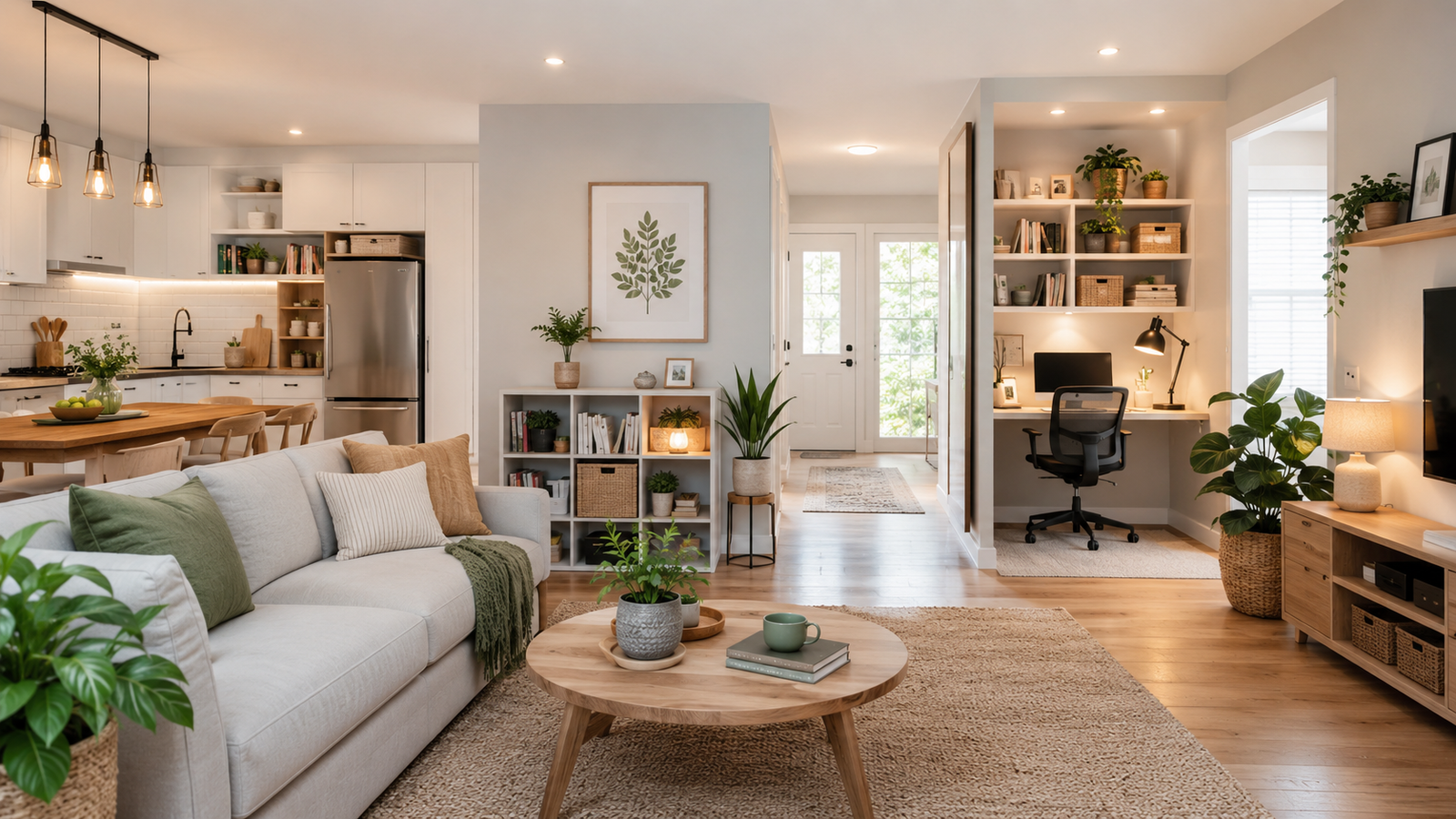
Define Activity Zones
Large rooms often work better when divided into distinct functional areas, such as:
- Reading corner
- Workstation
- Dining area
- Entertainment space
Clearly defined zones improve organization and make rooms feel more purposeful.
Scale Furniture Appropriately
Oversized furniture can overwhelm smaller rooms, while furniture that is too small may leave spaces feeling disconnected. Proportion plays a significant role in comfort and usability.
Improve Lighting for Function and Comfort
Lighting affects far more than appearance. It influences productivity, mood, visibility, and overall comfort.
Many homes rely too heavily on a single ceiling fixture. A layered lighting approach creates a more adaptable environment.
Ambient Lighting
Provides overall room illumination.
Task Lighting
Supports specific activities such as reading, cooking, working, or hobbies.
Accent Lighting
Highlights architectural features, artwork, or decorative elements.
Natural light should also be maximized whenever possible. Clean windows, lighter wall colours, and strategically placed mirrors can help distribute daylight more effectively throughout the home.
Build Smarter Storage Systems
Storage is most effective when it supports daily habits.
Instead of simply adding more containers, focus on creating storage solutions that are easy to access and maintain.
Effective storage strategies include:
- Vertical shelving
- Under-bed storage
- Multi-functional furniture
- Built-in cabinets
- Entryway organization systems
- Hidden storage compartments
Items used regularly should remain easily accessible, while seasonal or rarely used possessions can be stored in less convenient locations.
A well-organized storage system reduces visual clutter and improves overall household efficiency.
Design Flexible Multi-Purpose Spaces
Modern homes increasingly need to support multiple functions.
A spare bedroom may double as a home office. A dining room may occasionally become a study area. Living spaces often serve work, entertainment, exercise, and social purposes.
Flexible design allows rooms to evolve as needs change.
Useful solutions include:
- Foldable desks
- Expandable tables
- Room dividers
- Modular furniture
- Mobile storage units
Creating adaptable spaces helps maximize available square footage without requiring major renovations.
Common Home Planning Mistakes to Avoid
Many homeowners unintentionally create challenges when improving their space.
Prioritizing Appearance Over Function
Beautiful spaces are valuable, but functionality should always come first.
Ignoring Storage Needs
Insufficient storage often leads to recurring clutter problems.
Blocking Natural Traffic Flow
Furniture should support movement rather than create obstacles.
Following Trends Blindly
Design trends change quickly. Functional solutions tend to provide lasting value.
Overcrowding Rooms
More furniture rarely improves a space. Thoughtful selection usually creates a more comfortable environment.
Budget-Friendly Improvements That Make a Difference
Creating a more efficient home does not require a large renovation budget.
Small changes can often deliver significant results.
Consider:
- Rearranging furniture
- Installing floating shelves
- Adding better lighting
- Decluttering regularly
- Using storage baskets
- Reorganizing closets
- Creating dedicated activity zones
These affordable improvements often have a noticeable impact on daily comfort and usability.
Planning for Different Life Stages
A truly functional home evolves alongside its occupants.
Growing Families
Focus on flexible storage, child-friendly layouts, and adaptable spaces.
Remote Workers
Prioritize dedicated work areas, ergonomic furniture, and proper lighting.
Empty Nesters
Simplify layouts and eliminate underused furniture.
Retirees
Consider accessibility, safety improvements, and reduced maintenance requirements.
Planning with future needs in mind helps create a home that remains practical for years to come.
Creating a Home That Works for You
The most successful homes are not defined by size, style, or budget. They are defined by how effectively they support the people who live in them.
Thoughtful room layouts, strategic storage, proper lighting, and adaptable spaces all contribute to a more efficient home environment. By focusing on daily routines and real-world needs, homeowners can make meaningful improvements that enhance comfort, reduce stress, and improve quality of life.
Smart home planning is ultimately about making intentional decisions that help your living space function better today while remaining flexible for tomorrow.
Frequently Asked Questions
How can I make my home more functional without renovating?
Rearranging furniture, improving storage, reducing clutter, and enhancing lighting are affordable ways to improve functionality without major renovations.
What is the most important part of home planning?
Understanding daily routines and household needs is the foundation of effective home planning and space optimization.
How do I improve traffic flow in a room?
Create clear walkways, avoid furniture obstacles, and arrange seating to support natural movement through the space.
Why are multi-purpose rooms becoming more popular?
Multi-purpose rooms maximize available space and allow homeowners to adapt areas for work, leisure, storage, and family activities.
What are the best storage solutions for small homes?
Vertical shelving, hidden storage furniture, under-bed storage, and wall-mounted organizers help maximize space in smaller homes.
Conclusion
A functional home is built through thoughtful decisions, not expensive upgrades. By evaluating how each room supports your daily routine and making targeted improvements, you can create a living environment that feels more organized, comfortable, and efficient. Whether you’re optimizing storage, improving traffic flow, or designing flexible spaces, small changes often deliver significant results. The goal is simple: create a home that works for your lifestyle rather than forcing your lifestyle to work around your home. Prioritizing smart planning and home efficiency helps ensure lasting comfort, practicality, and value for years to come.