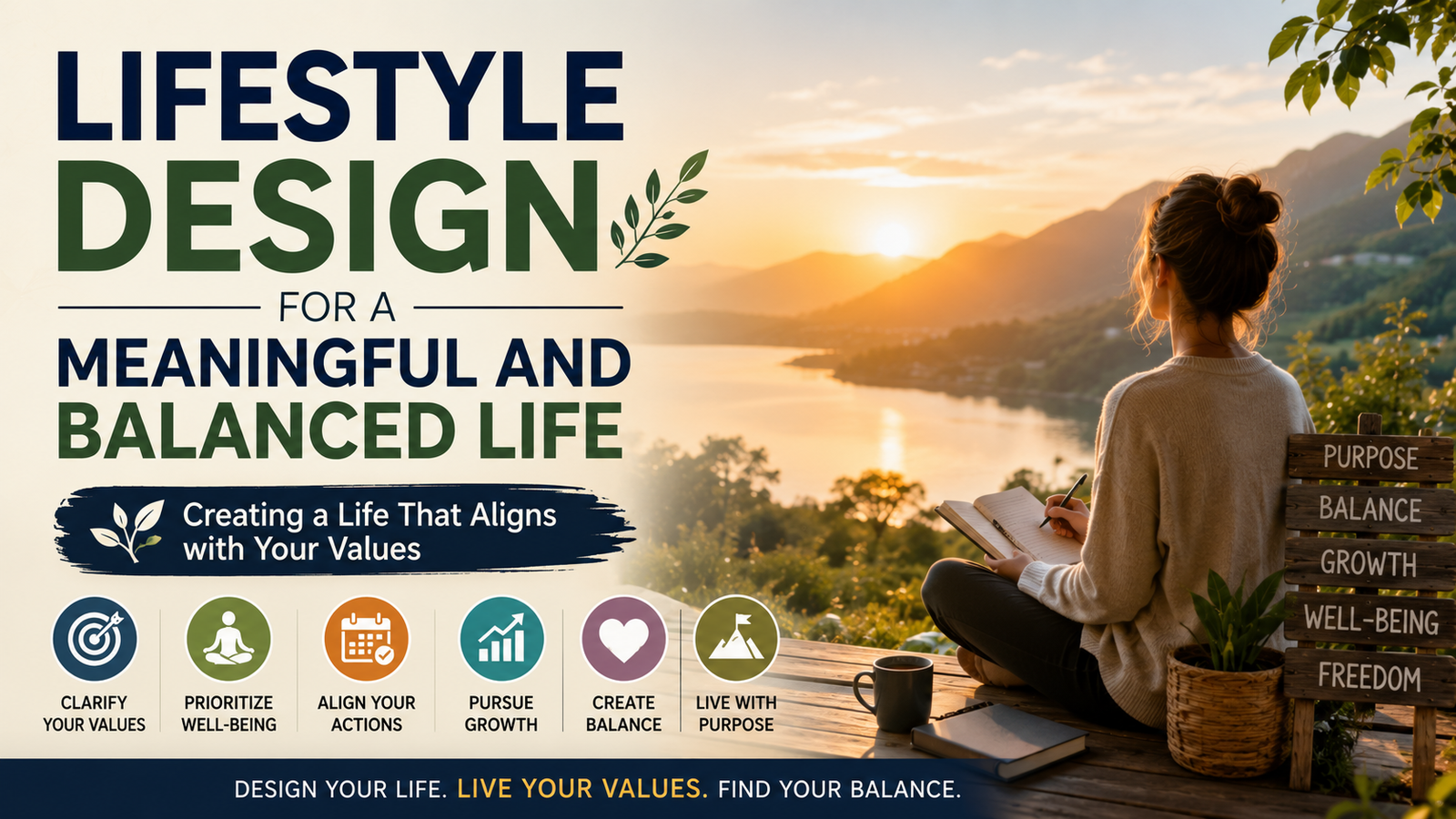
Life moves fast. Many people chase success, money, or status only to realize years later that something essential is missing. Lifestyle design offers a better path. It means intentionally shaping your days, choices, and environment so they reflect what truly matters to you. When your life aligns with your values, balance and fulfillment follow naturally.
Why Values Matter in Lifestyle Design
Your values act as your internal compass. They guide decisions about time, energy, and attention. Without clarity on what matters most—family, creativity, freedom, contribution, or growth—you risk building a life that looks good on paper but feels empty inside.
Start by asking simple questions: What activities make you lose track of time? When do you feel most proud or at peace? What would you regret not doing? Write down your top five values. Keep the list visible. Revisit it often. This single step brings remarkable focus to everyday decisions.
Assessing Where You Are Now
Honest self-assessment prevents wasted effort. Look at the main areas of your life: work, relationships, health, finances, personal growth, and fun. Rate each one from 1 to 10 on how satisfied you feel.
Many discover major gaps. You might earn well but feel constantly drained. Or maintain strong friendships yet neglect your body. These mismatches create quiet dissatisfaction that builds over time. The good news? Awareness is the first move toward change. Small, consistent adjustments in the lowest-scoring areas often create the biggest improvements.
Designing Daily Habits That Support Your Values
Habits shape your life more than big goals. Once you know your values, build routines that honor them.
– If health ranks high, protect morning movement or consistent sleep.
– If connection matters, schedule undistracted time with loved ones.
– If creativity fuels you, block time for writing, making, or exploring.
Keep habits simple and sustainable. Start with one or two changes rather than overhauling everything. Track progress gently for a few weeks. Adjust as needed. Over months, these small practices compound into a life that feels aligned and energizing.
Making Aligned Choices in Career and Relationships
Career decisions carry heavy weight. Ask whether your work uses your strengths, offers enough freedom, and contributes meaningfully. You don’t need a dramatic switch. Many find relief through better boundaries, skill-building, or gradual shifts toward more satisfying roles.
Relationships thrive under the same principle. Prioritize people who share or respect your core values. Practice saying no to commitments that drain you. Invest time in those who uplift and understand you. Healthy boundaries protect your energy and deepen the connections that matter.
Caring for Health and Finances as Foundations
Physical and financial health support everything else. You cannot design a meaningful life while constantly sick or stressed about money. Focus on basics: nourishing food, regular movement you enjoy, and restorative rest. For money, track spending against your values. Cut what doesn’t serve you. Build a simple buffer that creates choices.
These areas rarely need perfection. Steady, value-aligned progress beats sporadic intense efforts that burn out quickly.
Overcoming Common Obstacles
Burnout, comparison on social media, over commitment, and lack of direction trip up many people. Combat them by:
– Regularly reviewing your calendar and removing non-essential tasks.
– Limiting time on platforms that trigger envy.
– Practicing saying no without guilt.
– Returning to your values list when feeling lost.
Expect setbacks. Progress rarely moves in a straight line. Treat difficulties as information, not failure. Adjust and keep going.
Creating Your Personal Roadmap
Turn insight into action with a clear plan. Choose 3-5 specific, realistic goals for the next 6-12 months. Break them into small steps. Schedule regular check-ins—monthly works well for most.
Review what’s working and what isn’t. Celebrate small wins. Be willing to change direction as you learn more about yourself. The best lifestyle designs remain flexible.
Frequently Asked Questions (FAQs)
What is lifestyle design?
Lifestyle design is intentionally shaping your daily habits, choices, and environment to match your personal values and priorities for a more fulfilling life.
How do I identify my core values?
Reflect on moments when you feel most alive or proud. Ask what matters most in work, relationships, and free time, then list your top five values.
Can lifestyle design help with burnout?
Yes. It helps by clarifying priorities, setting boundaries, and replacing draining habits with sustainable ones that protect your energy and focus.
How long does it take to see results?
Noticeable improvements often appear within 4-8 weeks of consistent small changes, though deeper life alignment builds over several months.
Do I need to change my entire life at once?
No. Start with one or two aligned habits or decisions. Small, steady adjustments create lasting change without overwhelm.
Conclusion
Designing a meaningful, balanced life starts with knowing your values and making daily choices that honor them. It’s not about achieving perfection or copying someone else’s path. It’s about creating a life that feels like your own—satisfying, sustainable, and rich with purpose. Begin where you are. Take one small step today. Over time, these intentional choices build a life you genuinely love living.