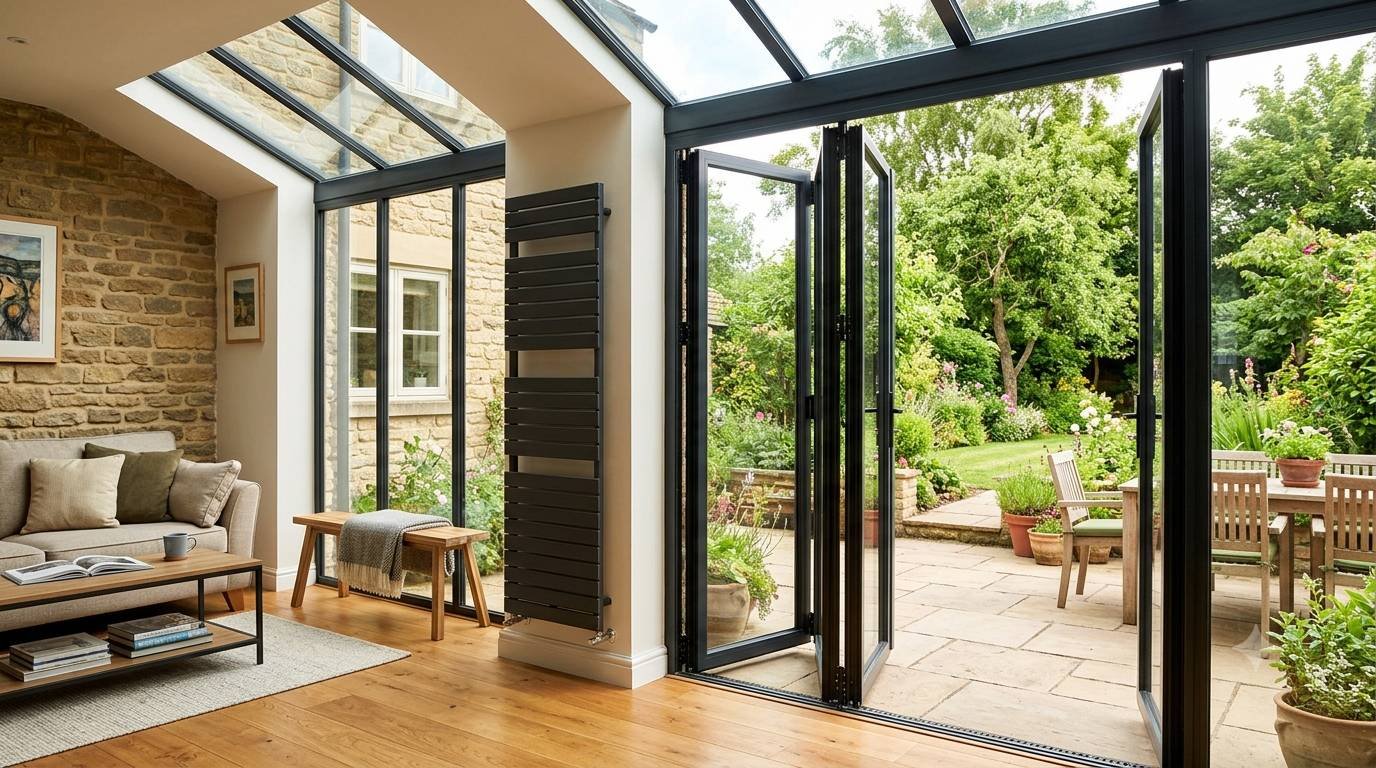
Glass extensions and bifold doors flood rooms with light yet leave little solid wall for radiators. High heat loss through large glazed areas demands efficient output from the remaining space. A well-chosen column design can deliver the warmth needed without dominating the clean lines of modern glazed living.
Glass extensions and wide bifold openings create bright, open living spaces that connect indoors with the garden. The downside is reduced solid wall area and higher heat loss through the glazing. Conventional wide panel radiators often struggle to fit or provide enough output in the narrow strips of wall that remain. A compact yet effective solution is the 3 column radiator. Its triple-column design increases surface area for better heat transfer while keeping the overall footprint relatively slim. This allows meaningful warmth to reach the room without crowding the clean architectural lines that make glazed extensions so appealing.
Why Glass Extensions Challenge Conventional Heating
Large areas of glass lose heat faster than solid walls, especially on cold nights or windy days. Solar gain can warm the space during the day, but once the sun drops the temperature falls quickly. Bifold doors, when closed, still present a large thermal bridge compared with insulated masonry. The result is a room that needs reliable, responsive heating. Traditional long horizontal radiators may not fit beneath the glazing or beside the doors, leaving only narrow vertical walls or short stretches of solid wall available.
How Limited Wall Space Changes Radiator Choices
With less wall available, every centimetre of radiator surface must work harder. Vertical orientations become more practical because they use height rather than width. Slimmer profiles help the unit sit neatly without protruding into the room or blocking light. At the same time the radiator must still deliver sufficient BTU or wattage to counteract the heat loss. Choosing a design that balances surface area with a compact shape is therefore essential.
The Advantage of Three Columns in Compact Spaces
A 3 column radiator offers a useful middle ground. The three vertical tubes create more surface area than a single-panel model of similar width, improving heat output and convection. The design remains relatively slender compared with deeper four- or six-column versions, so it fits comfortably on the limited solid walls found in many glazed extensions. Horizontal versions work well on short stretches of wall beside bifolds, while vertical models make efficient use of taller side walls. Both orientations keep the visual weight light, preserving the open feel of the space.
Managing Heat Loss Through Large Glazed Areas
Even the best radiator cannot overcome poor insulation. Low-emissivity glass, thermally broken frames and effective seals around bifolds all reduce the demand placed on the heating system. Once those measures are in place, a correctly sized column radiator can maintain comfortable temperatures without constant high boiler output. The goal is to lower the overall heat loss so the limited wall space is used efficiently rather than overworked.
Positioning for Maximum Output
- Place the radiator on a solid external or internal wall rather than a partition if possible.
- Ensure clear air flow around the unit so convection is not blocked by furniture or curtains.
- Consider a vertical model on the side walls flanking the bifolds to free the main view.
- Keep the radiator away from direct draughts from the doors when they are open.
Correct positioning maximises the useful heat delivered into the room rather than wasted against glass or cold air currents.
Choosing Finishes That Complement Modern Glazing
Clean, simple finishes work best with large areas of glass. Traffic white or soft anthracite keeps the radiator visually quiet and allows the architecture to remain the focus. Matte surfaces reduce reflections that might compete with the light pouring through the bifolds. Matching the valve colour to the radiator finish creates a coherent appearance that feels intentional rather than added later.
Practical Steps to Size and Install Correctly
Calculate the heat loss of the extension carefully, taking account of the glazed area, orientation and insulation levels. Use a reliable BTU or wattage calculator and size the radiator to meet or slightly exceed that figure. Check the available wall dimensions before ordering so the unit fits without awkward gaps. Ensure the existing heating system has enough capacity or can be extended to supply the new radiator. Bleed the system after installation and confirm the inhibitor is present to protect the metal. These steps turn a limited wall into a reliable source of warmth.
Final Thoughts
Glass extensions and bifold doors reward careful heating choices. Limited solid wall space and elevated heat loss demand radiators that deliver strong output from a modest footprint. The 3 column radiator meets this need by combining useful surface area with a relatively slim profile that fits the remaining walls. Correct sizing, thoughtful positioning and proper system support ensure the room stays comfortable even when external temperatures fall. By treating the radiator as an integral part of the glazed design rather than an afterthought, homeowners gain both the light-filled space they want and the reliable warmth they need throughout the colder months.